
The Green Fortress: The Hidden History of Makonde Mpingo (Ebony) Sculptures
What happens when a people use the hardest wood on earth to carve their way to freedom? This is the story of Makonde art; a breathtaking tradition forged in the hidden forests of East Africa to evade the slave trade. From the haunting, dreamlike forms of the Mashetani spirit carvings to the unified pillars of Ujamaa, Makonde sculptors have spent centuries forcing the unyielding "iron tree" (mpingo) to speak. But behind the obsidian radiance of these world-renowned masterpieces lies an urgent reality: requiring a high-stakes relay race between three different master artisans and decades of gruelling apprenticeship, this magnificent tradition is fast becoming a dying craft. Dive into the history of the resilient Makonde people, explore the philosophies behind their most iconic styles, and discover why witnessing one of these sculptures today is nothing short of a minor miracle.
EDUCATIONARTISANSHERITAGEMAKONDEEBONY SCULPTUREEBONY WOOD
Introduction to the Makonde People and Mpingo Wood
The Makonde people, an ethnic group predominantly found in Tanzania and Mozambique, are renowned for their rich cultural heritage and artistry. Predominantly residing in the northeastern regions of Mozambique, they have a history that is intertwined with the dense forests of African blackwood (Dalbergia melanoxylon; colloquially referred to as ebony wood due to historical evidence indicating it as the original “ebony”). African blackwood is a deeply significant tree and type of wood to various cultures, going by numerous African names (Mhembote, Mupako and Kidamo, among many others) – but most popularly, mpingo (in Swahili). Commonly used for ornaments and musical instruments, this remarkable timber has earned a prestigious status among artisans and sculptors alike due to its exceptional qualities – it is the hardest known wood, phenomenally strong and has a strikingly unique appearance.
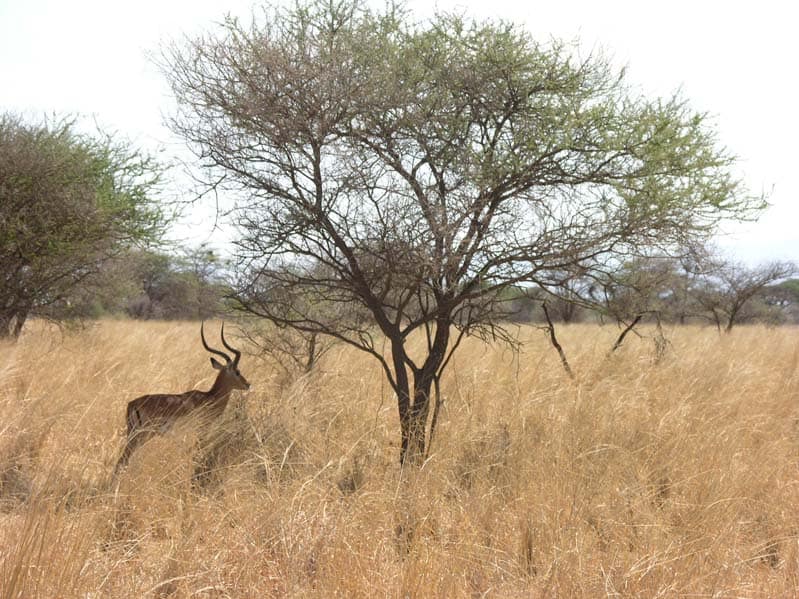
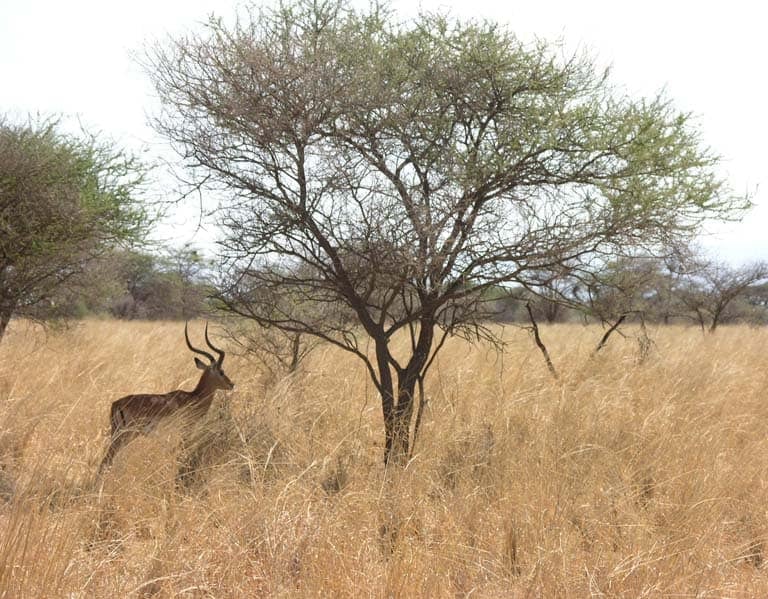
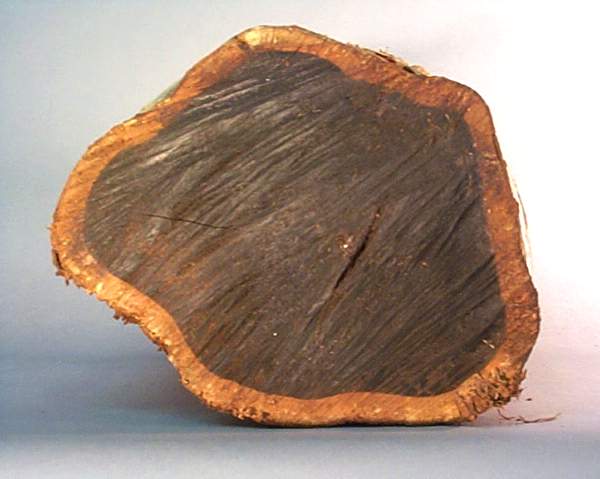
First: the African blackwood tree in its natural habitat.
Second: Endgrain of an African blackwood log.
(Photo credits: the African Blackwood Conservation Project)
These virtues not only allow for intricate carving but also grant the finished sculptures an impressive durability that resonates with the timelessness of the Makonde culture. The dark, rich colouration of mpingo adds to its allure, providing a stunning visual appeal that enhances the aesthetic value of sculptures crafted from it. Additionally, its small girth and twisted branches lay the perfect groundwork to inspire complex but natural sculptural forms. These qualities highlight why it is treasured among the Makonde, who have used it for centuries to express their identity, beliefs, and traditions.
Moreover, mpingo wood has a deep cultural significance within the Makonde community. It is not merely a material but rather a crucial element that facilitates storytelling and the continuation of their heritage. The intricate sculptures created from this wood serve as a bridge connecting the past with the present, narrating the tales of ancestors, spirituality, and the social dynamics that shape their community. Makonde art largely falls into three categories: Ujamaa, Mashetani, and a third, more amorphous strain. Each piece created offers a glimpse into the Makonde's collective consciousness, serving as an echo of their rich history and identity. It is through the interplay between the skilful hands of the Makonde artisans and the resilient nature of mpingo that we unearth the profound legacy encapsulated in their sculptures.
The Historical Context of Makonde Sculpture

The Makonde people have a rich history intrinsically tied to the sociopolitical landscape of East Africa, particularly during the period impacted by the slave trade. This tumultuous era forced many communities, including the Makonde, to adopt a strategy of retreat and concealment. As a result, they sought refuge in the remote and dense forests of the Mueda Plateau, which provided not only physical shelter but also a space for cultural preservation and artistic expression. This isolation was pivotal in the development of the Makonde's unique artistic language, allowing them to cultivate their craftsmanship free from external influence or interference. The harsh realities of the slave trade motivated the Makonde to create art that asserted their identity, resilience, and agency. Their sculptures, primarily carved from the indigenous ironwood, evolved as a means to resist cultural erasure and exploitation, embodying both personal and communal narratives.
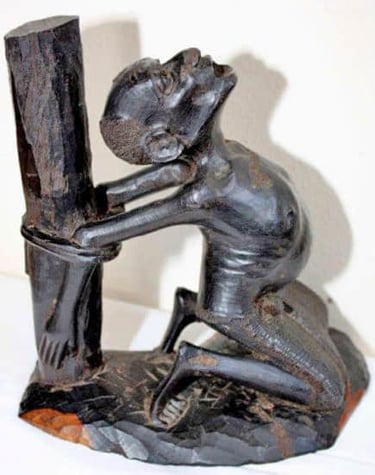
A Makonde sculpture of a slave bound to a post (photo credit: Sebastian Hansen).
As the Makonde people continued to thrive in their secluded environment, their artistry began to attract the attention of European colonisers in the late 19th and early 20th centuries. The colonial encounter brought a new dimension to the appreciation of Makonde sculpture, as European collectors and anthropologists recognised the Makonde as exceptional artisans. Their sculptures were celebrated not merely for aesthetic qualities but also for the underlying stories and cultural significance embedded within each piece. This recognition marked a crucial turning point; from being relegated to the margins of history, the Makonde artists emerged as influential figures in the global art scene. Thus, the historical context of the Makonde sculpture highlights not only the resilience and creativity of the Makonde people but also the broader implications of their art in addressing cultural survival amid adversity.
Colonialism affected the Makonde people and art in ways more tangible than mere renown. Post-colonial Makonde art saw shifts in style, wood choice and artistic foci as forced labour, commissions and taxes prompted a change from the practices of traditional woodcarving – this also saw the emergence of the Shetani style in the early 1950s, spearheaded by Samaki Likankoa. This art form, while a symbol of culture, independence and resistance, was undeniably shaped by the oppression it resisted and was born out of.
An Overview of the Makonde Sculpture’s Artistic Lineages
The rich cultural heritage of the Makonde people is profoundly expressed in every sculpture. This art is characterised by three distinct artistic lineages: Mashetani, Ujamaa, and a third lineage often characterised by varying themes and techniques. Each of these lineages reflects different aspects of the Makonde social and spiritual identity, creating a tapestry of meaning woven through centuries of tradition. These themes have been developed upon with modern (post-1930s) Makonde art, introducing Shetani (Swahili for “devil”) and Binadamu.
The first lineage, Mashetani, is perhaps the most emblematic of Makonde sculpture, featuring figures that often embody supernatural spirits and ancestral figures. These works explore themes of metaphysics, linking the material world with the spiritual realm. The mashetani sculptures are not merely decorative but serve as essential instruments for spiritual communication and rituals. Through them, the Makonde articulate their beliefs around life, death, and the connection to their ancestry. Shetani-style woodcarvings extend this, also expressing mythology and spirits through otherworldly physical traits, playing with humanoid and animalistic forms as well as various culturally significant symbols. These mythic figures, like nature spirits and devils, are said to live separately from the human world, but still interact with and influence human actions, for better and for worse. Shetani spirits can also more abstractly represent an emotional state and are described by some to be inspired by dreams (when the soul is the most separate from the body).
In contrast, Ujamaa conveys the communal spirit and shared values of the Makonde people. This lineage showcases sculptures that celebrate togetherness, harmony, and the collective experience of survival. Artistic representations within Ujamaa often depict family groups or cooperative activities, emphasising the interdependencies that sustain the community. The themes of collaboration and unity underscore the notion that survival relies on social cohesion, making this lineage a profound commentary on the community's resilience.
The third lineage presents an evolution of styles and themes, often influenced by contemporary events and the changing societal landscape. Artists draw from both traditional motifs and modern concepts, creating works that resonate with current social issues while retaining a connection to their heritage. This lineage highlights the adaptability and ongoing relevance of Makonde sculpture in addressing new challenges and narratives. This includes Binadamu (seen below); a naturalistic style based on the depiction of social roles and daily life, largely developed and popularised post-occupation to appeal to European tastes.
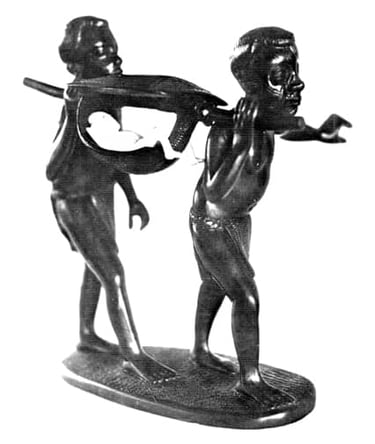
A Binadamu-style blackwood carving of African porters carrying a baby (carved from white ivory) in a sling.
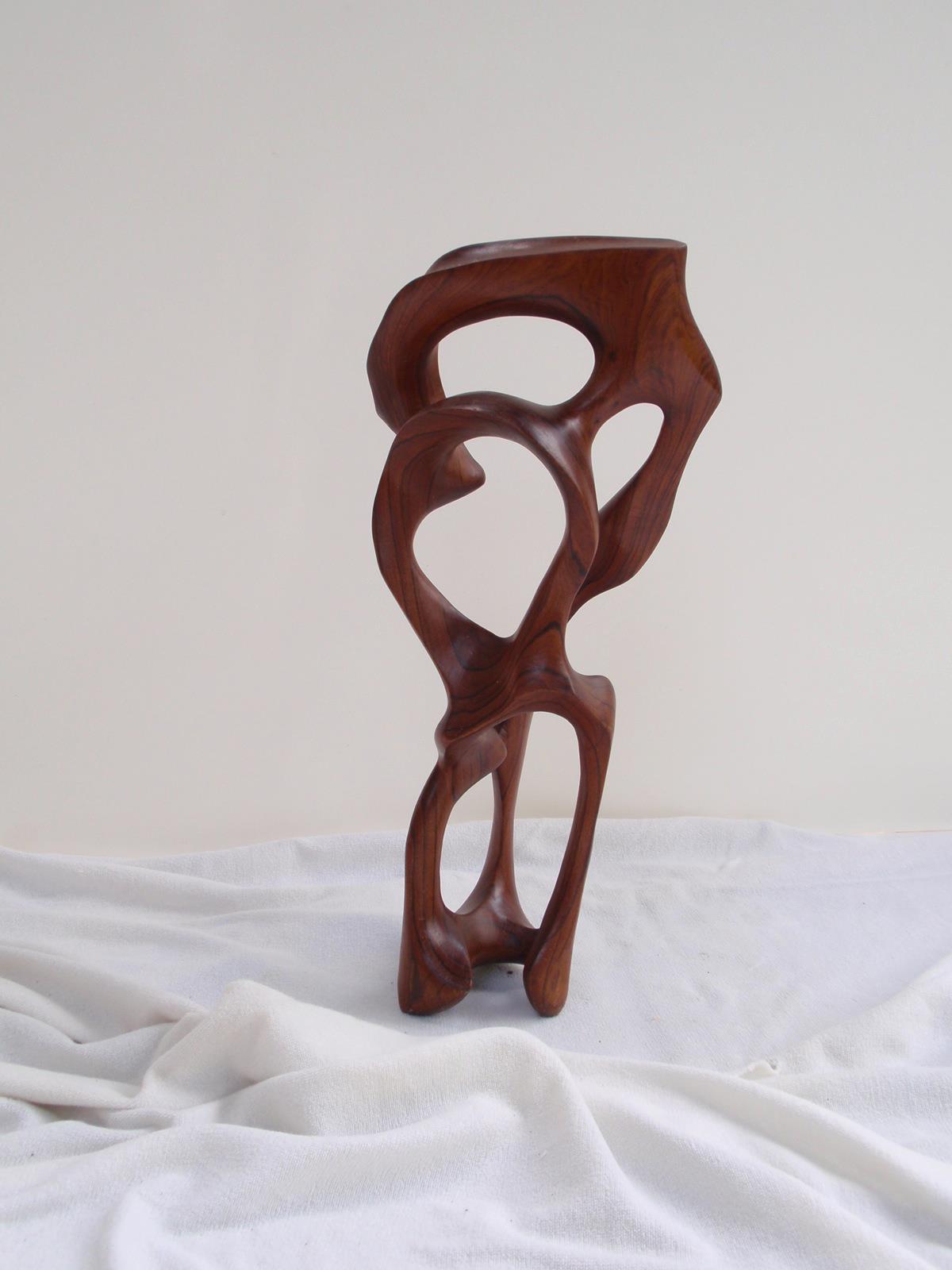
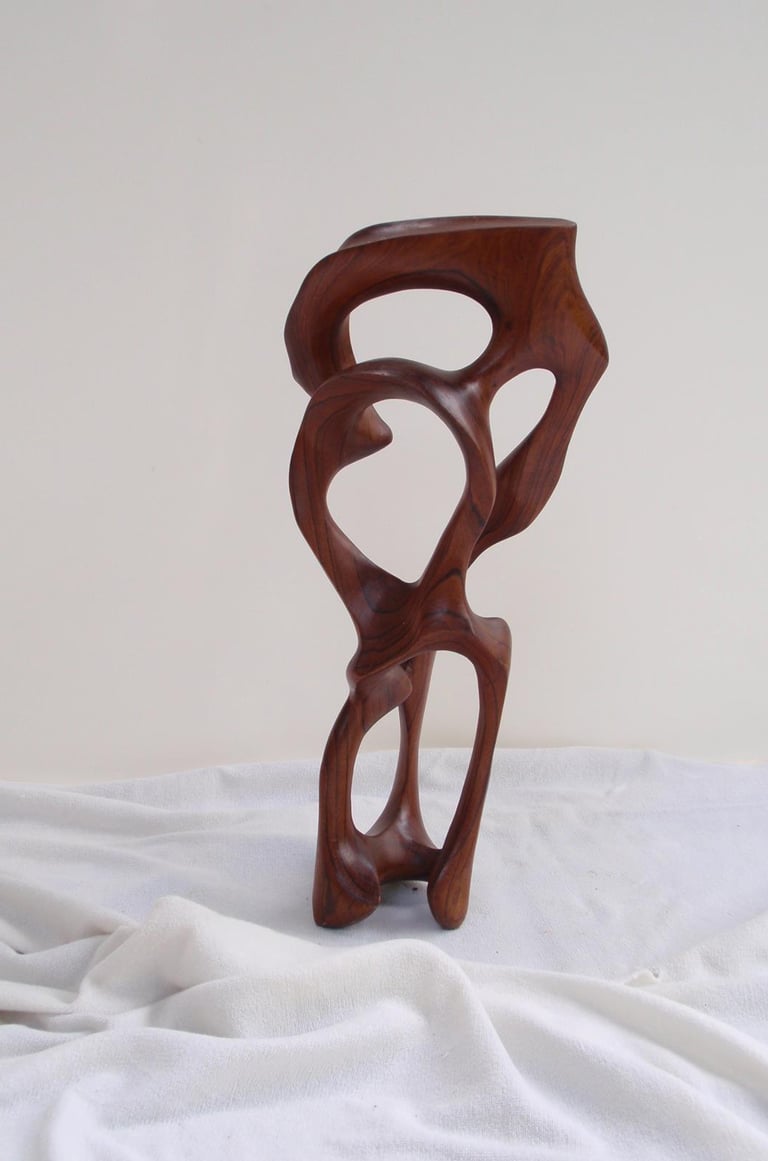
Modern Makonde art has also seen an embrace of complete abstraction: a fully abstract style of carving without any discernible figures – including master (but underrated) sculptors such as Clements Ngala (creator of the Mawingu style, meaning “clouds”, and inspired by the ephemeral images, featureless faces and abstract objects he observed in the clouds) and George Lugwani, depicted below. Even in more abstruse forms, Makonde art is still rife with intention in its representation: one of Lugwani’s marbled Mharaka pieces (also seen below) is designed with the reaffirmation of one’s life partner being the right one.
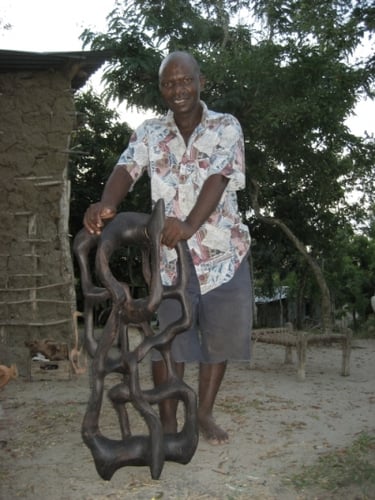
First; George Lugwani, pictured with one of his abstract sculptures.
Second; another of Lugwani’s sculptures, affirming the ‘rightness’ of one’s life partnerships.
Together, these lineages not only narrate the history and cultural evolution of the Makonde people but also provide insight into their enduring legacy and the complexities of their existence.
Mashetani: Spirits of the Forest
Mashetani-style (translating to "spirits" in the Makonde language) sculptures reflect the reverence the Makonde have for nature, particularly the mpingo (African blackwood) tree. The belief among the Makonde people is that the mpingo trees possess a sentient quality, inherently connecting them to the spiritual realms of existence. It is this sentiment that profoundly informs the mashetani sculptures, infusing them with a surreal and abstract aesthetic. Mashetani symbolises the ethereal forces that the inhabitants believe inhabit the forest. These sculptures serve not merely as art but as conduits for communication with ancestral spirits. The intricate carvings depict a range of imagery — often blending human forms with animal characteristics, embodying spiritual narratives that reflect the beliefs and practices of the Makonde. The act of sculpting is therefore considered a spiritual ritual, aimed at honouring these spirits and maintaining a connection with one's heritage.
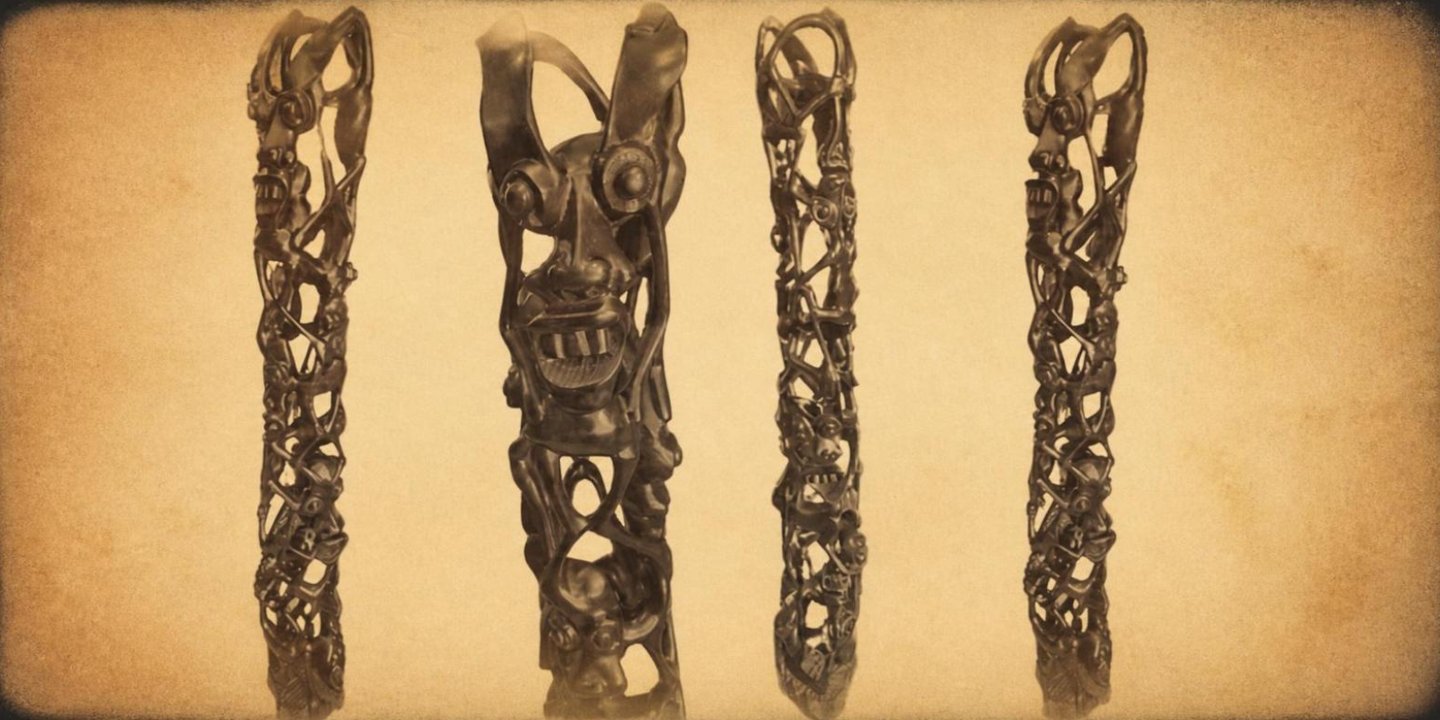
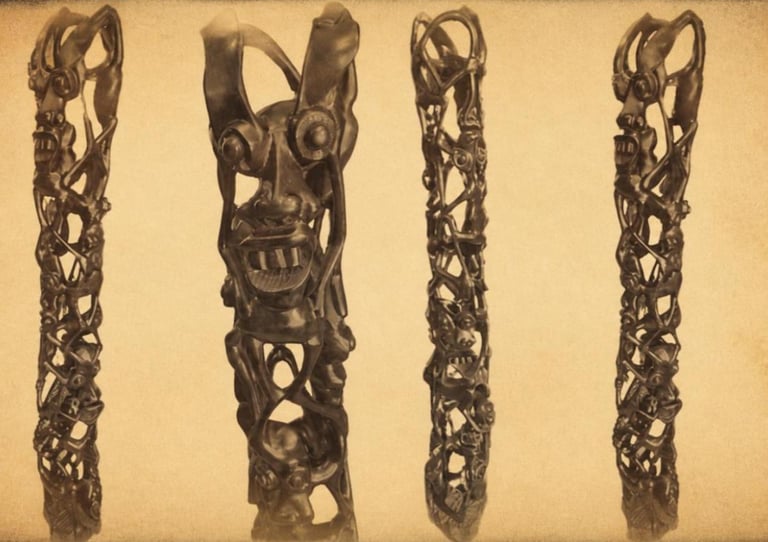
A sculpture exemplifying the Mashetani style, playing with the distortion and amalgamation of human features.
This style plays an integral role in the cultural practices of the Makonde. During ceremonies, these carvings are prominently displayed, allowing participants to engage with their ancestors’ spirits. Such engagements foster a sense of collective identity and continuity, reinforcing the values and traditions passed down through generations. As a manifestation of both artistry and spirituality, mashetani sculptures stand as a testament to the Makonde’s deeply rooted relationship with the natural world, bridging the gap between the physical and the spiritual through thoughtful expression and monumental craftsmanship.
Ujamaa: Resistance through Togetherness
The Ujamaa (also known as ‘Tree of Life’) style serves as a powerful testimony to the resilience of the tribe during periods of turmoil. As the Makonde people faced significant challenges, including the ravages of civil war and forced migration, they turned to their artistic traditions as a means of preserving their cultural identity and fostering a collective sense of community. Ujamaa, meaning "familyhood" in Swahili, is characterised by its themes of unity, interconnectedness, and familial bonds, which are intricately captured within each piece of sculpture. Often depicting figures that embody harmony and collaboration, The Ujamaa reflects the social structures that define the Makonde community, a distinctive illustration of the intricate relationships that exist within families and the community at large. This style originated with the Dimoongo (‘power of strength’) style, traditionally portraying a central figure surrounded by and supported by other figures, but has also been more abstractly interpreted – for example, the sculpture depicted below, which combines the Mawingu (“clouds”) style with the concept of togetherness from its carving of many structures all from a single piece of African blackwood, all supporting and interlinked with each other.
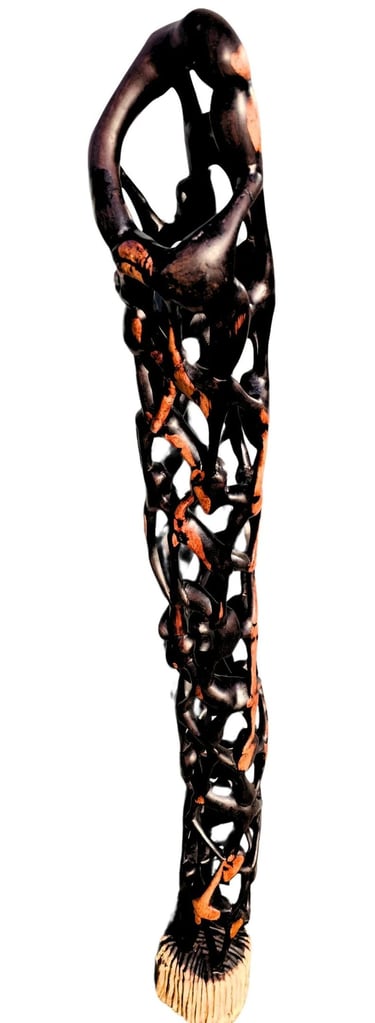
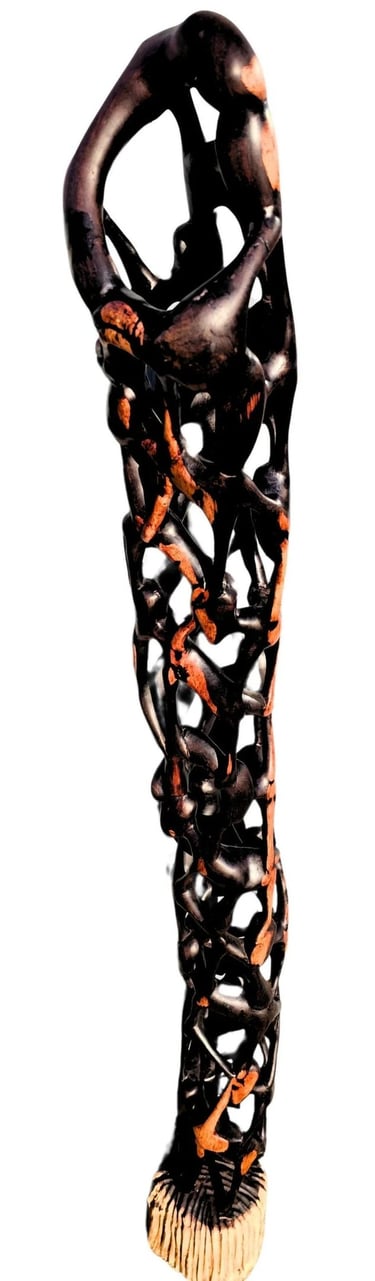
This portrayal of joint figures symbolises shared struggles and victories, highlighting the importance of collective strength in overcoming adversity. Such representations serve as both an artistic expression and a form of storytelling, revealing the narrative of a tribe that, despite facing external pressures, found ways to maintain its identity and solidarity. But the significance of Ujamaa sculptures extends beyond mere aesthetics; these creations have played a crucial role in reinforcing the cultural infrastructure of the Makonde people. They embody the values of cooperation, support, and mutual respect that are foundational to their way of life. Each sculpture serves not only as a piece of art but also as a reminder of the very principles that keep the community anchored in times of uncertainty. As such, ujamaa sculptures stand as enduring symbols of cultural resilience, inspiring future generations to uphold the traditions that define their identity. Community was seen as the most fundamental aspect of resistance, and as such, Ujamaa is the ideology that formed the basis of post-independence Tanzania's social and economic development policies, as well as being deeply ingrained in Tanzania’s collective social mindset.
Hidden Treasures: The Craftsmanship Behind Makonde Sculptures
The Makonde people of Tanzania and Mozambique are famous for their exquisite ironwood sculptures, primarily crafted from the highly valued mpingo wood. This dense and dark hardwood possesses unique qualities, making it an ideal medium for intricate carvings. The craftsmanship behind Makonde sculptures is not merely a vocation but an art form that has evolved over generations, steeped in cultural significance and tradition.
Artisans employ a range of traditional tools to create these remarkable pieces. Basic tools such as chisels and knives, often crafted by the artisans themselves, allow for meticulous detailing. The combination of hand tools and physical skill translates into expressive forms that embody the rich narratives of Makonde folklore and spirituality. The process begins with the careful selection of mpingo trees, which requires a deep understanding of the wood's characteristics, given its rarity and the environmental challenges faced today. Once the wood is procured, artisans undertake a careful process of shaping, refining, and polishing the sculptures. The carving technique involves both subtractive and additive methods, where sections of wood are removed to reveal figures or patterns, and additional elements may be added to enhance the composition. This intricate craftsmanship requires not only technical skill but also an innate aesthetic sensibility, allowing artisans to convey emotions and tell stories through their work.
Modernity poses many challenges to Makonde artisans: African blackwood has become one of the most expensive woods in the world due to overharvesting, poor conservation planning, and deforestation, as well as the species' naturally low germination rates and the 60+ year maturation time. Additionally, the increasing demand for mass-produced art and the slow extinction of traditional crafts globally – striking Makonde art particularly hard due to the gruelling work and decades it takes apprentices to perfect their techniques, especially working with a medium as difficult and unique as mpingo wood – mean that it is becoming rarer and rarer to see this wonderful level of craftsmanship, and we are seeing less of this rich cultural knowledge passed on to new apprentices.
Despite all of this, the dedication of Makonde artisans remains steadfast. Efforts to preserve this unique craft through education and community engagement are essential for ensuring its survival. Such initiatives help maintain the legacy of Makonde sculpture, allowing our future generations to appreciate and contribute to this exceptional artistic heritage.
A Powerful Legacy: What These Sculptures Mean Today
"To generically place the Makonde artists in isolation, in the corner and in the bush, is a Western paternalist fiction."
- João Sarmento and Moisés de Lemos Martins, writing on Makonde art and its influence beyond the rural communities it was born from
While Makonde art blossomed from isolation, it spawned a legacy that extends far beyond their green fortress. It transcends mere artistic expression, embodying a heritage that continues to resonate in contemporary society, and symbolises the community's resilience and artistic innovation through generations. In today’s world, they still play a crucial role both in preserving cultural narratives and continuing the tradition of resistance. Each piece is a vessel of historical significance, reflecting the values, beliefs, and experiences of the Makonde community. Makonde art also supported the fight for Mozambican liberation from as early as 1959 until Mozambique finally achieved independence in 1975, with sculptors creating cooperatives and artwork sales directly financially contributing to the struggle for freedom.
Tragically, the Mueda Plateau, whose dense vegetation was once a haven for the Makonde people, is estimated to have lost ~96.2% of its forest cover over little over a century: its spiritual and historical significance lives on primarily through increasingly rare Makonde sculptures.
It is an art form too beautiful and important to let die the slow death we have been seeing more and more traditional crafts succumb to.
As audiences engage with this art, they not only celebrate the craftsmanship involved but also honour the stories and ideology they represent. The movements within the sculptures often encapsulate themes of survival, strength, and unity, which remain relevant in various social contexts. Moreover, the resurgence of interest in traditional art forms is prompting a greater recognition of the Makonde’s contributions to the global artistic landscape. Both traditional and modern Makonde art are part of the backbone of African art; in galleries and exhibitions worldwide, these sculptures evoke curiosity and admiration and encourage a dialogue around cultural exchange and appreciation. This engagement invites individuals from diverse backgrounds to reflect on their own heritage while recognising the importance of preserving artistic traditions.
In conclusion, the legacy of Makonde sculpture is a compelling narrative of identity, resilience, and innovation. It stands as a powerful reminder of the enduring role that art plays in documenting history and fostering cultural continuity, urging us to appreciate the Makonde’s artistic expression as a vital component of our shared human experience.
Get in touch!
+44-7740-890522
truetanzaniaexplore@gmail.com
© Copyright 2027 exploretruetanzania.com. All Rights Reserved.
Address
Come find us at:
True Tanzania,
Studio 6,
43 Ebury Bridge Road,
London,
SW1W 8DX